


Shop number 101, First floor,Maruti Plaza, Plot number 457,
Vidya Vikas Circle, Gangapur Road, Nashik
As we age, the skin gradually loses some of its firmness and elasticity. This may lead to mild sagging around the cheeks, jawline, eyebrows, and neck. If you are looking for Thread Lift Treatment in Nashik, understanding the procedure, its benefits, limitations, and suitability can help you make an informed decision.
Nehete Skin and Hair Clinic is a dermatology and aesthetic care centre led by Dr. Sanket Nehete MD (Dermatologist, Dermatosurgeon & Hair Transplant Surgeon). The clinic's approach focuses on detailed consultations, clear explanations, and personalised treatment planning for individual skin concerns.
A thread lift is a minimally invasive cosmetic procedure that uses specially designed threads placed beneath the skin to provide a temporary lifting effect. Depending on the thread type and technique, the procedure may also stimulate collagen-related tissue responses. However, results vary, and thread lifts are not a permanent replacement for a surgical facelift.
If you are considering a non-surgical facelift in Nashik, a consultation with a qualified medical professional can help you understand whether a thread lift or another facial rejuvenation option is appropriate for your concerns.
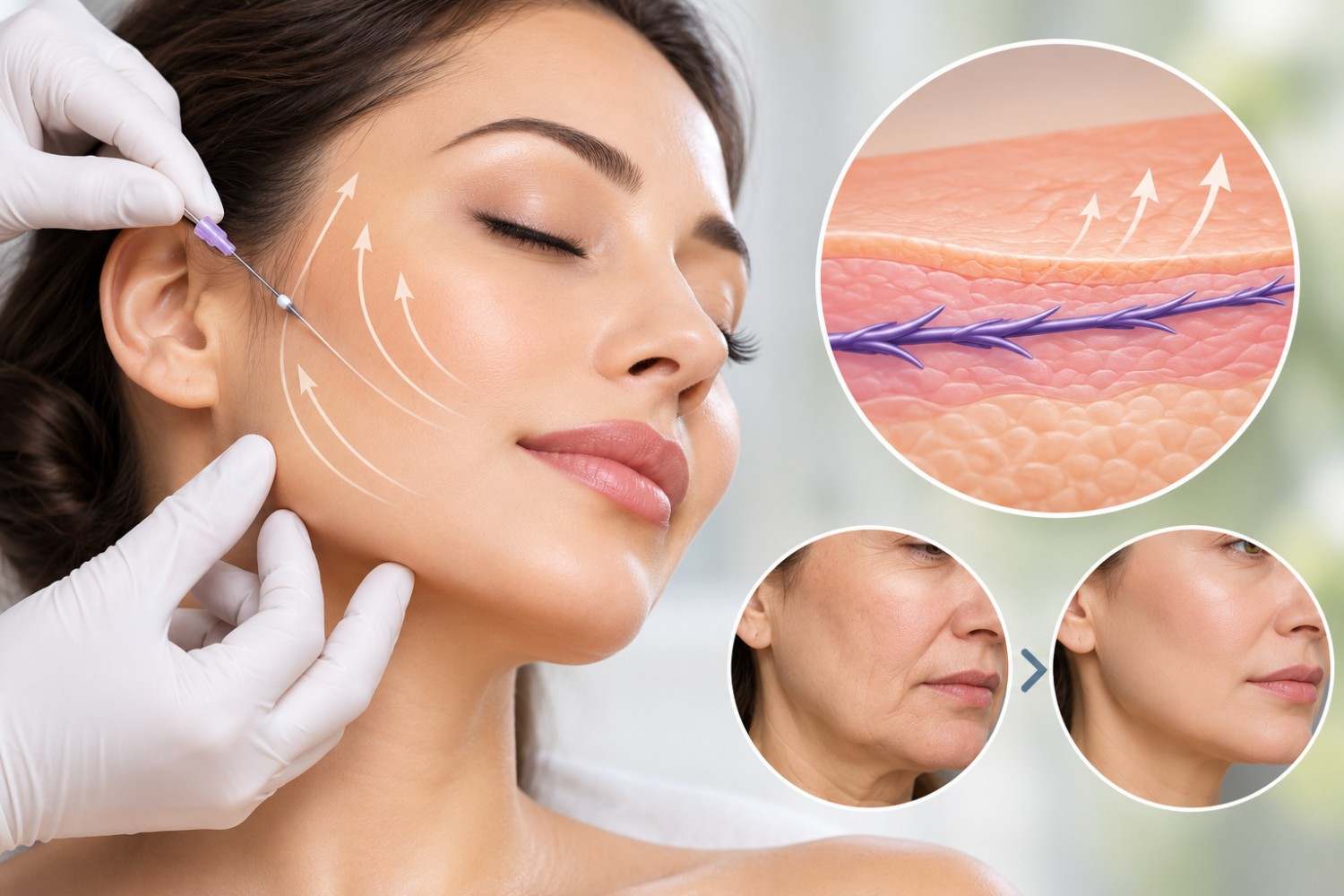
Thread lift treatment is a minimally invasive aesthetic procedure designed to provide a subtle lift to selected areas of the face or neck. Specially designed medical threads are placed under the skin using an appropriate technique. The threads help reposition targeted tissues and may support collagen remodelling as the body responds to the procedure.
Unlike a traditional surgical facelift, a thread lift generally does not involve extensive surgical incisions. However, it is still a medical procedure that requires appropriate training, sterile technique, careful patient selection, and a clear understanding of possible complications.
People who notice early signs of facial sagging may wish to discuss thread lift treatment with a qualified practitioner. Potential concerns include:
A thread lift is not suitable for everyone. People with significant skin laxity may need to consider other options, while certain medical conditions, active skin infections, or individual anatomical factors may affect eligibility.
A thread lift may offer selected benefits for appropriately chosen patients. The extent of improvement differs from person to person.
Threads can provide mechanical support to selected tissues, creating a lifting effect in the treated area. The degree of lift depends on the person's facial anatomy, skin laxity, thread design, and technique.
Thread lifts generally require smaller entry points rather than the larger incisions associated with a surgical facelift. Nevertheless, the procedure involves placing material beneath the skin and should be performed by an appropriately trained medical professional.
Some absorbable threads may stimulate the body's healing response and collagen remodelling. The extent and clinical importance of these effects vary, and evidence supporting long-term rejuvenation remains limited.
For selected individuals with mild sagging, a thread lift may be considered as one option for facial rejuvenation. A professional assessment is needed to determine whether the expected benefit is appropriate for the degree of skin laxity.
A consultation allows the practitioner to assess facial proportions, skin condition, and treatment goals. This can help determine whether a thread lift, another procedure, or a non-procedural approach is more appropriate.
The procedure typically involves several stages. The exact process varies according to the thread system, treatment area, and practitioner's technique.
The practitioner discusses your concerns, medical history, current medications, allergies, previous cosmetic procedures, and desired outcome. The skin and facial anatomy are assessed to determine whether a thread lift is appropriate.
If you are considered a suitable candidate, the practitioner explains the proposed treatment area, type of thread, expected level of improvement, potential risks, and alternative options. You should have an opportunity to ask questions before deciding whether to proceed.
The treatment area is prepared using appropriate hygiene and sterile techniques. Local anaesthesia may be used, depending on the procedure and the practitioner's protocol.
The threads are placed beneath the skin using the selected technique. The practitioner positions them to support the intended lifting effect. The procedure should be performed only by a suitably trained professional using threads intended for the relevant cosmetic application.
After treatment, you receive instructions on caring for the treated area, limiting activities where advised, and recognising possible complications. Follow-up allows the practitioner to assess healing and address concerns.
Thread lift procedures are most commonly discussed for selected areas of the face and neck. Suitability depends on anatomy and the specific thread system.
A thread lift may be considered for selected cases of mild cheek sagging. The expected improvement is generally subtle and may not be suitable for people who need significant tissue repositioning.
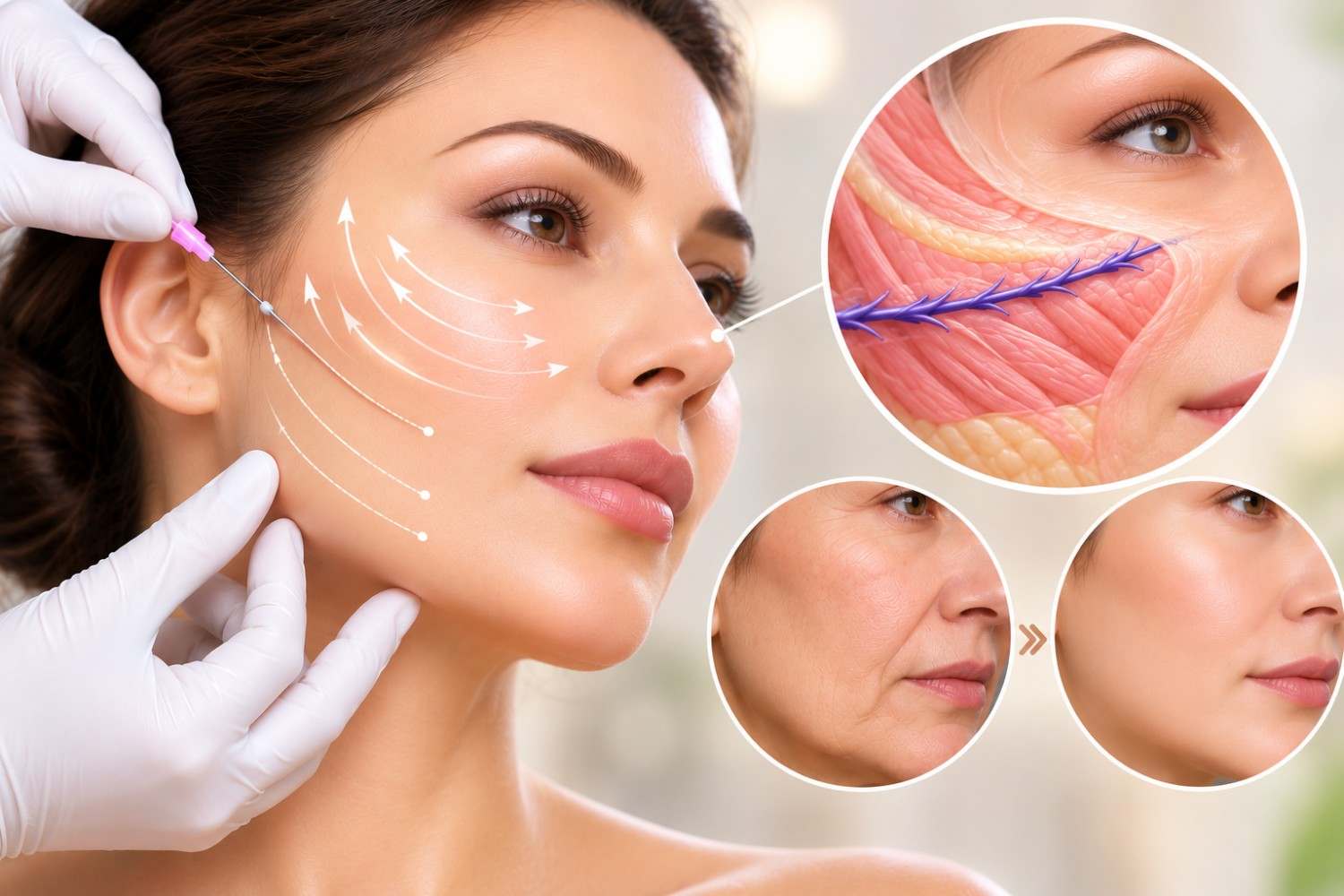
Some patients seek a thread lift to improve the appearance of early jowls or jawline definition. The result depends on skin laxity, facial structure, and the amount of tissue support required.
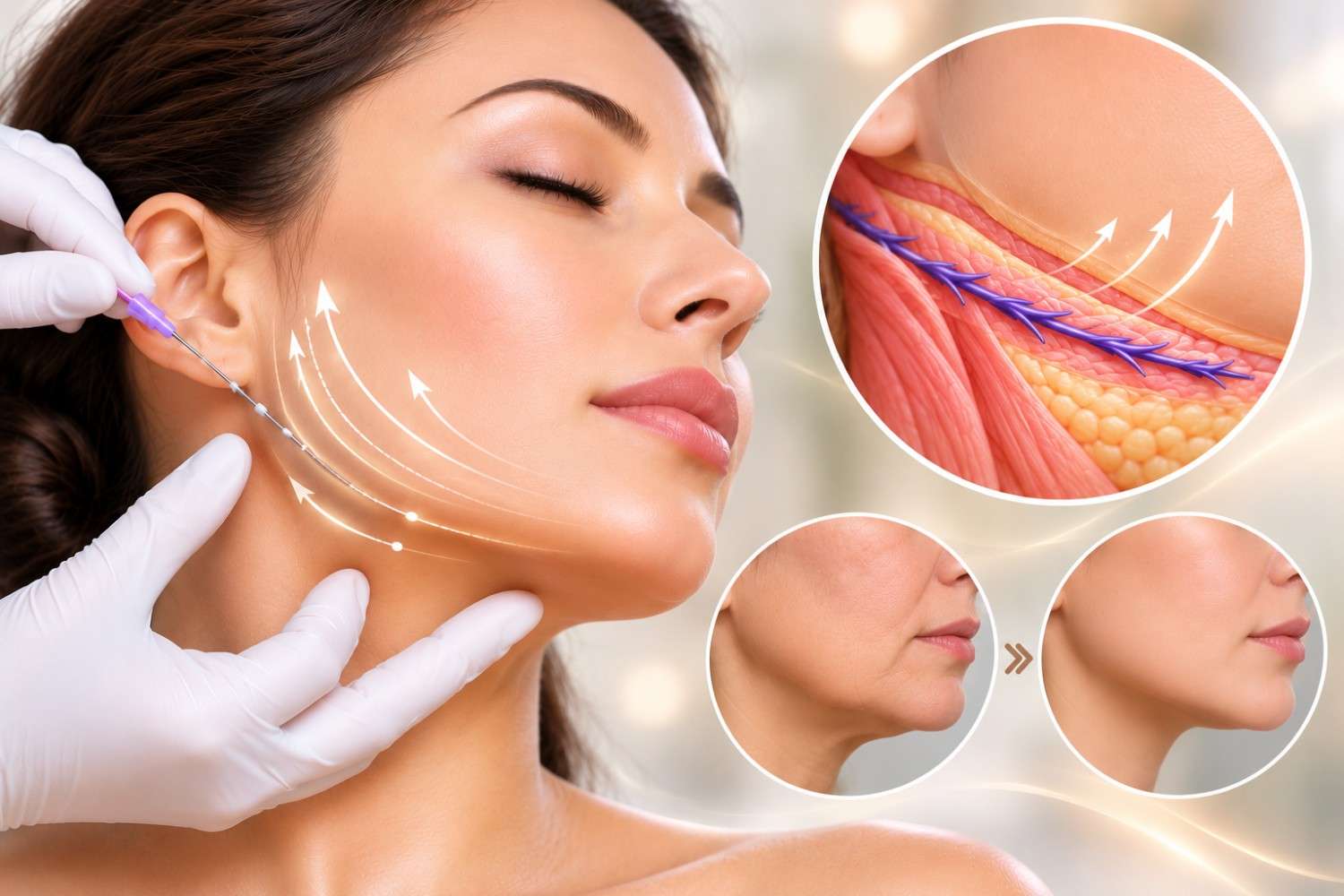
Selected thread techniques may be used to create a modest lift around the brow area. Careful assessment of facial anatomy and the risks of treating this region is essential.
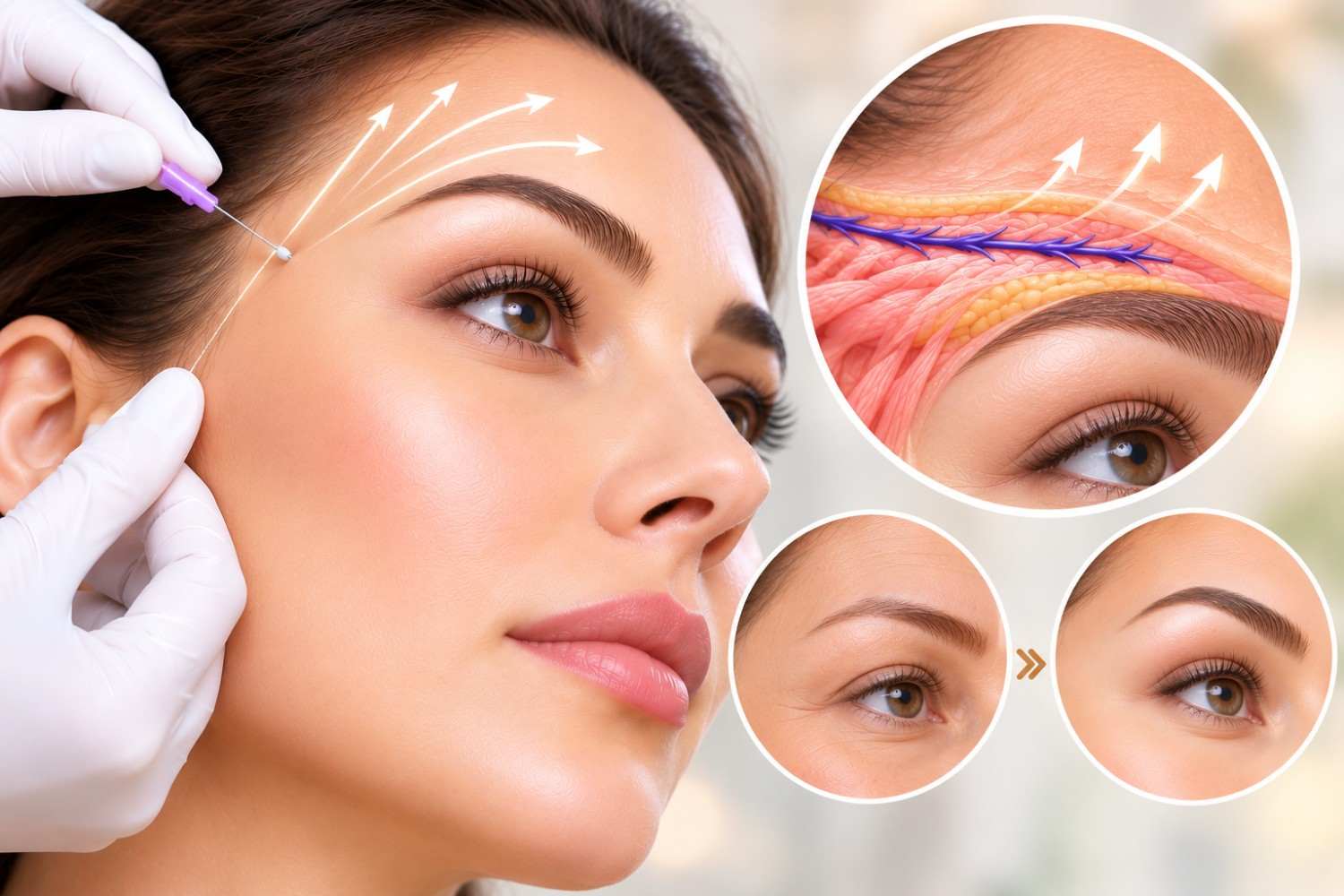
Thread lifting may be considered in selected cases involving mild skin laxity in the neck. More pronounced loose skin may require a different approach.
People researching thread lift treatment in Nashik often want to understand how it differs from a surgical facelift.
A thread lift is minimally invasive and generally aims for a subtle, temporary lifting effect. A surgical facelift is an operation that repositions deeper tissues and removes or redistributes selected skin to address more significant signs of ageing.
The procedures differ in their invasiveness, recovery, risks, results, and suitability. A thread lift may not be appropriate for people who need substantial correction of sagging skin. Conversely, some people may prefer to explore less invasive options when their concerns are mild.
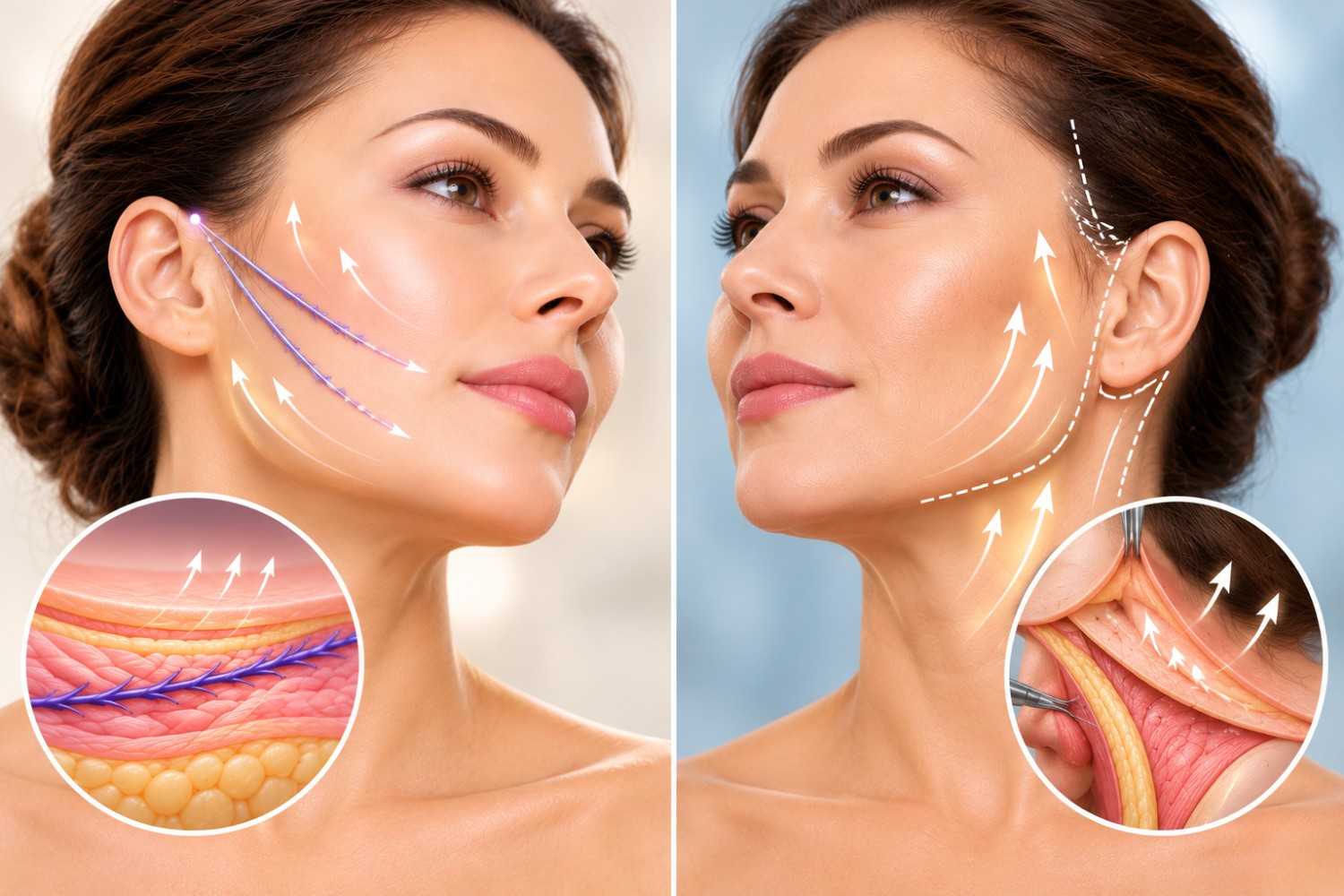
Thread lift treatment is a medical procedure and is not risk-free. Possible complications include swelling, bruising, discomfort, infection, facial asymmetry, skin dimpling or contour irregularities, visible or displaced threads, and inflammatory reactions. Less common but more serious complications can also occur.
Risk depends on factors such as thread material, technique, anatomy, hygiene, and patient selection. Evidence for long-term results is limited, so it is important to have realistic expectations and understand that the lifting effect is temporary. Published reviews have documented both common short-term effects and less common complications.
Before undergoing treatment, ask the practitioner about the thread being used, their relevant training and experience, possible complications, aftercare, and what to do if a problem develops.
Recovery varies according to the technique, treated area, and individual response. Some people experience bruising, swelling, tenderness, or tightness after the procedure.
Your practitioner may recommend temporary restrictions on vigorous exercise, facial massage, or activities that put pressure on the treated area. Follow the specific instructions provided by your treating professional rather than relying on general online advice.

The duration of a thread lift result varies with the type of thread, technique, treatment area, degree of skin laxity, and individual healing response. The initial lifting effect may gradually diminish as tissues settle and the threads are absorbed, depending on the material used.
A thread lift should not be presented as a permanent solution for facial ageing. Current evidence supports a short-term lifting effect more clearly than a long-term, durable result. Your practitioner should explain the expected duration and limitations for the particular procedure being considered.
Choosing a treatment based only on online photographs or promotional claims can lead to unrealistic expectations. Facial anatomy, skin quality, the severity of sagging, medical history, and personal goals all affect treatment selection.

Nehete Skin and Hair Clinic, led by Dr. Sanket Nehete, MD, emphasises detailed consultation, transparent explanations, and personalised treatment planning. If you are considering facial rejuvenation, discuss your concerns and ask which options are appropriate for you.
Before choosing a thread lift, make sure you understand:
If you are exploring Thread Lift Treatment in Nashik, understanding the procedure, its benefits, limitations, and potential risks is essential before making a decision. A thread lift may provide a subtle, temporary lifting effect for selected people with mild facial sagging, but it is not a permanent replacement for a surgical facelift, and results vary.
At Nehete Skin and Hair Clinic, led by Dr. Sanket Nehete, MD (Dermatologist, Dermatosurgeon & Hair Transplant Surgeon), the approach to patient care emphasises detailed consultation, clear explanations, and personalised treatment planning. Discuss your facial rejuvenation goals with a qualified medical professional to understand the options that may be appropriate for you.
The cost can vary according to the treatment area, type and number of threads, practitioner, and complexity of the procedure. Contact the clinic for current pricing after an assessment. Avoid choosing a provider on price alone; training, hygiene, thread suitability, and follow-up care are important considerations.
Not necessarily. A thread lift may provide a subtle, temporary improvement for selected cases of mild sagging. A surgical facelift can address more significant tissue laxity but involves surgery and different risks and recovery requirements. The suitable option depends on your anatomy, goals, and medical assessment.
The duration depends on the treatment area, technique, preparation, and number of threads used. Your practitioner can provide a more accurate estimate during consultation.
Local anaesthesia is commonly used to help manage discomfort during the procedure. Some tenderness, tightness, or discomfort may occur afterward. The experience varies, so discuss pain management with your practitioner before treatment.
Possible side effects include swelling, bruising, discomfort, asymmetry, skin dimpling, infection, and thread visibility or displacement. Serious complications are less common but can occur. Discuss the risks and warning signs with your practitioner.